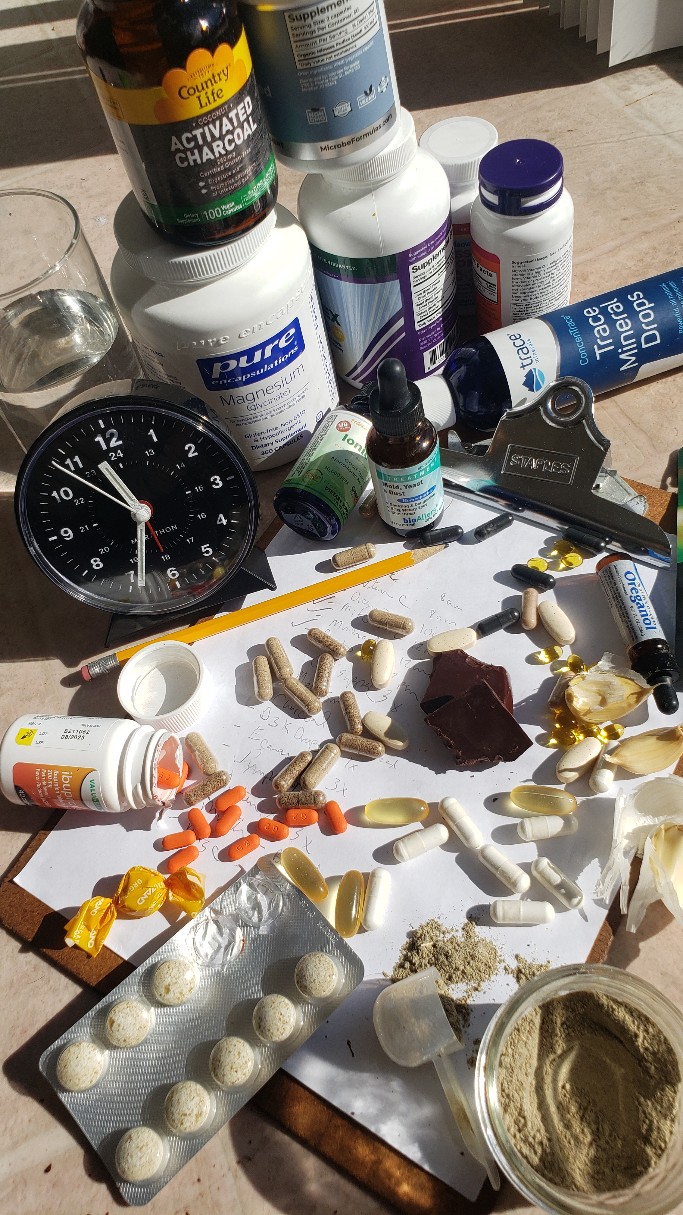
Supplements are unregulated in the way most people assume. The front of the bottle is marketing; the truth lives on the back panel. This guide walks you through vetting brands, decoding the Supplement Facts, spotting the fillers worth avoiding, and choosing a form your body can actually use — without falling for the word 'natural.'
1. Trust Before You Read a Label
Before fillers even matter, you must know your products. These must be trusted, third-party tested, with many, many positive reviews. Never just go by what the advertisements say — even when it says '3rd party tested,' 'no fillers,' or 'best quality.' Look up reviews and other qualified research on brands. Vet the brand, not just the bottle. A clean label means little if the company cuts corners. Research the brand's reputation, recalls, and sourcing standards the same way you would a food company.
Reputable brands send products to independent labs (NSF, USP, ConsumerLab, ISO-accredited) to verify identity, purity, potency, and absence of contaminants. Look for a third-party seal — then verify the lab is real, not just a logo on the bottle.
2. Fillers & Excipients — What They Are
Fillers (also called excipients) are the non-active ingredients added to make a capsule flow through manufacturing, hold a tablet together, preserve shelf life, or bulk up a dose. They are listed under 'Other Ingredients' — separate from the Supplement Facts panel. Fillers aren't necessarily bad, but they can subtract from the potency and full amount of the serving size. A capsule has a fixed volume — the more of that space taken by fillers, binders, and flow agents, the less room there is for the active ingredient. Fillers can also affect absorption and tolerability, especially in sensitive systems.
Note on serving size and blends: the amount in the Supplement Facts is the active ingredient, but within a proprietary 'blend,' the company does not have to disclose how much of each active is in the blend, and the total blend weight can include smaller active amounts than you'd assume. This is where '1000mg' can quietly mean less active than it sounds — read the blend line carefully.
3. Watch For These
Common excipients a low-additive, sensitive approach often avoids:
Maltodextrin (a hidden source of MSG) — a processed starch that can trigger MSG-like reactions in sensitive people. Read labels on powders especially — it shows up where you'd least expect it.
Gluten-containing fillers — wheat-derived starches and some binders can sneak gluten into a 'gluten-free-appearing' product. If you're sensitive, look for an explicit gluten-free certification, not just a missing wheat claim.
Silicone dioxide — a flow agent used to keep powders from clumping in the machine. Generally recognized as safe in small amounts, but many clean brands avoid it and it's unnecessary for most sensitive patients.
Magnesium stearate — the most common flow agent in the industry. See the dedicated section below on whether it's actually bad.
4. Label Reading Basics
'Natural' doesn't mean better. 'Natural' is one of the least regulated words on a label. Natural flavor, natural colors, and 'naturally derived' can still be heavily processed and can still react in a sensitive body. Read the actual ingredient list, not the marketing word.
Serving size — this isn't always one capsule. Read the serving size line fully. A serving might be 3 or 4 capsules, not one. Do you want to take 4 capsules each time to reach the dose you're after? That also means a 180-capsule bottle only lasts 30 days, not 180 — do the math before you judge the price.
Lower price isn't automatically lower quality — but it may be. Price is a clue, not a verdict. Some excellent brands are fairly priced; some overpriced bottles are mostly filler. Do your research, read the ingredient list, and vet the product.
More active ingredients does not equal better. In fact, the more ingredients in a single supplement, the harder it is to differentiate between what you reacted to and what is just fine. If you react, you can't isolate the cause. Starting simple removes that conundrum entirely.
5. Daily Multi — Notes
A daily multivitamin is the most common — and most over-blended — supplement people take. Check the form of each nutrient, not just the amount: folate vs folic acid, methylcobalamin vs cyanocobalamin, chelated vs oxide minerals, active vs inactive forms. Your genetics and your gut determine which you can actually convert and use. (See the genetics blog for how SNPs affect this.) Watch the 'mega' blends — some multis pack 40+ ingredients into one tablet. If you're sensitive, a simpler, targeted stack is often better tolerated and easier to troubleshoot.
6. Probiotics & Prebiotics
Many of the probiotic and prebiotic supplements out there don't make it to your gut before your stomach acid has completely demolished them. There are some brands — like Seed or others — where they are highly praised and known for their potent, acid-resistant abilities. Do your due diligence; as with these, it is most likely the case that if they are cheap, they aren't worth it.
If you have dysbiosis (gut bacteria that is all out of balance), adding more good bacteria from a probiotic isn't going to fix that problem. You may in fact have too much of a good bacteria already, causing some of the problem. Balance is key — so testing your gut levels, and then working with your actual gut accordingly, will serve you better. Unless you are very depleted (say, from being very malnourished or on a long round of antibiotics), it is ideal to rebuild the gut bacteria with actual food. High-quality fiber from flax, apples, berries, arugula — basically all good real foods for prebiotics — and probiotics from kimchi, kefir, homemade sourdough, cultured butter, and pickles.
7. Cross-Referencing & Vetting Brands
Using something like Fullscript to cross-reference items on Amazon can be helpful to trust brands. Still, do back research on Fullscript as well, as they carry brands like NOW, Solgar, and others which, though they are well known, most have lots of fillers and excipients. Always flip the bottle and read 'Other Ingredients' — even on a dispensary. When you know a good brand, stick with it. Once you've done the research and found a brand your body tolerates and trusts, stop re-deciding every time. Build a trusted rotation and let it simplify your life.
8. Form Matters — Powder vs Liquid vs Tablet vs Chewable
Which form is 'best' depends on your gut, your sensitivities, and what you're trying to absorb.
Powder — Often the cleanest label (fewer binders needed) and the easiest to dose flexibly. Good for sensitive stomachs and for nutrients you need larger amounts of. Downside: taste, mixing, and some powders are gritty or oxidize once exposed to air. Best for high-dose minerals, vitamin C, collagen, and greens.
Liquid — Fastest to absorb and the easiest on a compromised digestive tract — nothing has to dissolve first. Excellent for sensitive patients, kids, and anyone with low stomach acid. Downside: shorter shelf life once opened, sometimes lower potency per dose, and check the base (some use glycerin, alcohol, or sugars you may not want).
Tablet — The most shelf-stable and often cheapest — but tablets require the most binders, fillers, and compression agents to hold their shape, and they must break apart in the stomach before the nutrient is available. If you have low stomach acid or slow digestion, tablets can pass through under-absorbed. Read the 'Other Ingredients' carefully here.
Chewable / Gummy — Convenient and tolerable, but almost always the most additive-heavy — sugars, sweeteners, colors, flavors, and binders to make them palatable. Fine occasionally; not ideal as your daily workhorse if you're aiming for a low-additive approach.
How to choose: If absorption or sensitivity is your main concern, lean liquid or liposomal. If dose and clean label matter most, lean powder. Reach for tablets and chewables only when convenience outweighs the additive load — and read the back panel every time.
9. Liposomal — What It Is and When It Helps
Liposomal delivery is the fastest-absorbing oral form available. Liposomal wraps the active nutrient inside tiny fat (phospholipid) spheres called liposomes. Because the body readily absorbs fats, the nutrient 'hitches a ride' through the gut wall and bypasses some of the usual breakdown and loss. Standard oral nutrients can lose a large percentage to stomach acid, poor conversion, and gut dysfunction. Liposomal delivery protects the nutrient in transit and can dramatically raise how much actually reaches your cells — which matters most for hard-to-absorb nutrients like glutathione, vitamin C, certain B's, and curcumin.
Liposomal shines when you have absorption issues, low stomach acid, gut damage, or a sensitive system that reacts to high doses of standard forms. It lets you get meaningful results from a smaller, gentler dose. But liposomal products vary wildly in quality — look for real phospholipid bases (sunflower is common; avoid soy if you're sensitive), verify third-party testing, and read the 'Other Ingredients.' Quality liposomal is usually more expensive; if it's cheap, it probably isn't truly liposomal.
10. Is Magnesium Stearate Bad?
Magnesium stearate is a flow agent — it stops powders from sticking to the manufacturing machinery so capsules fill consistently. It's in a huge share of supplements because it's cheap and effective. For the general population, the amounts used are generally regarded as safe and the concern is often overstated. It isn't poison. But 'not acutely toxic' isn't the same as 'ideal for a sensitive, chronically ill body.'
The real concerns: it can reduce how fully the active ingredients dissolve and absorb, it can form a biofilm in the gut in sensitive people, and some stearate sources (especially cheap, non-vegetable-derived) can carry contaminants. For someone with MCAS, gut issues, or a highly reactive system, it's a common thing people feel better without. The practical take: if you tolerate it fine and the product is otherwise excellent, it's not worth losing sleep over. If you're sensitive and reacting, seek out stearate-free brands — many clean, practitioner-grade lines now use alternatives like L-leucine or rice extract.
The Takeaway
Read the back of the bottle, not the front. Vet the brand, not the advertisement. Start simple, choose the cleanest form your body tolerates, and let trusted brands simplify the rest. Your supplements should support healing — not add to the load your body is already carrying.
A condensed, printable checklist of the key points above — vet brands, watch-for fillers, label-reading basics, and form selection — to keep handy when you shop.
Get the printable Quick Sheet for How to Read Supplement BottlesRelated conditions: