These practices are collectively known as Nervous System Regulation Interventions (or Somatic Neuroplasticity). They are body-and-mind practices designed to shift the body out of a chronic stress response — the fight-or-flight state — and into a state of safety, while physically changing the brain's neural pathways. Rather than just talking about problems the way traditional talk therapy does, these modalities use a bottom-up approach: using the body to change the brain.
When you first enter the world of nervous system healing, the terminology can feel overwhelming. Brain retraining, somatics, vagus nerve retraining, vagal tone, body-based practices — they all sound related, but what exactly is each one, and how do they fit together? This guide breaks down every term and system, and shows how they intertwine as parts of one unified approach.
1. Somatics (The Foundation). Somatics comes from the Greek word soma, meaning “the living body.” It is an umbrella term for practices that use internal bodily awareness to release trapped physical stress, trauma, and tension. The foundational somatic modalities include:
• Somatic Experiencing (SE): A body-oriented therapeutic model, developed by Peter Levine, that helps safely release the energy of past trauma trapped in the body — not by reliving the story, but by letting the body complete the survival response it never got to finish.
• Orienting: Gently finding three neutral or pleasant objects to focus on — a color on the wall, the texture of a chair, the light from a window. It gives real-time sensory evidence that the present moment is safe. When the eyes confirm there is no threat, the brainstem downshifts out of fight-or-flight. The body cannot receive any other signal of safety until it has confirmed, through the eyes, that the environment itself is safe.
• Somatic Yoga & Movement: Slow, conscious movements performed to notice internal sensations rather than external alignment, helping the body unwind stored tension at its own pace.
• Breathwork: Specific breathing patterns — like box breathing or holotropic breathwork — used to directly alter blood chemistry and emotional states in real time.
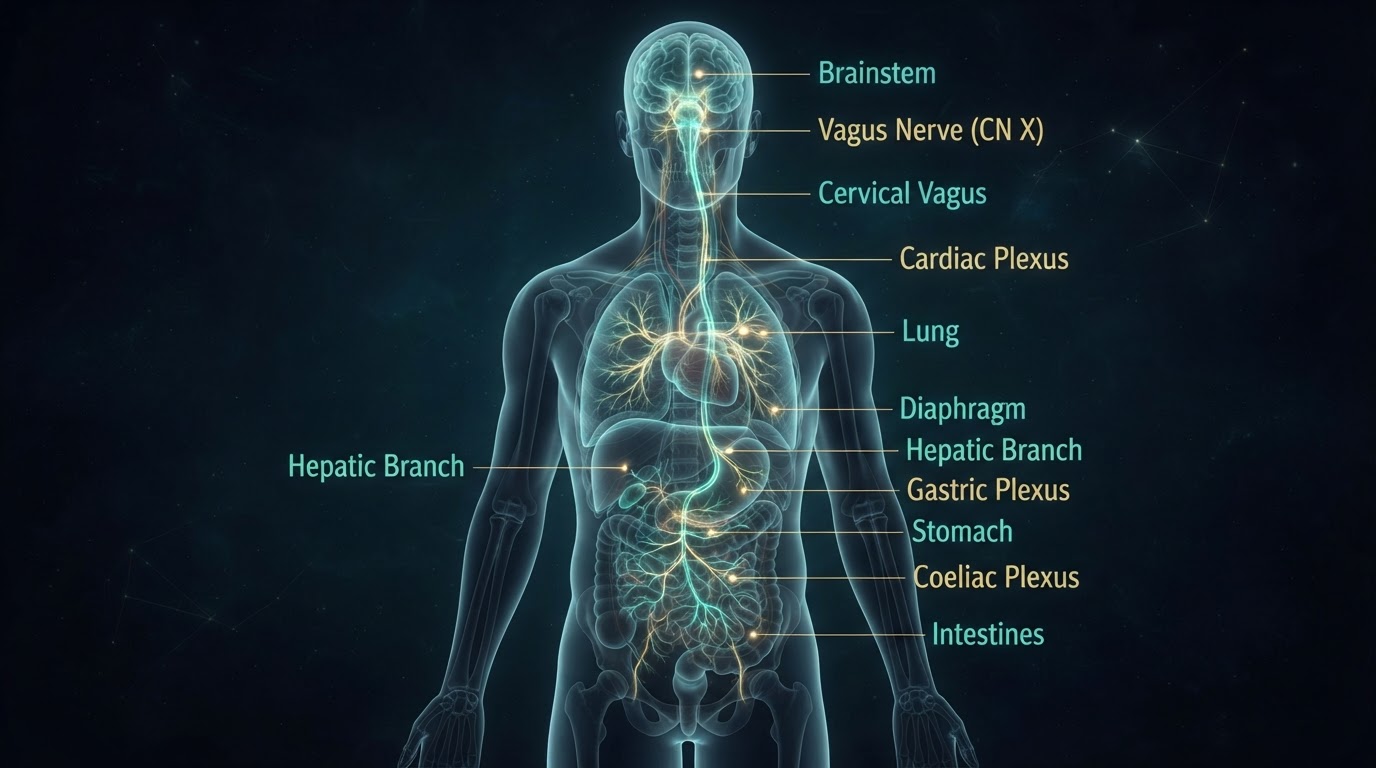
2. Vagus Nerve Retraining (The Regulator). The vagus nerve is the longest nerve in your autonomic nervous system, running from your brainstem down to your abdomen. It acts as the main highway for the parasympathetic nervous system — the “rest and digest” response. Retraining aims to increase vagal tone so your body can bounce back from stress faster. Key techniques include:
• Vocal Toning & Humming: Sound vibrations that physically stimulate the vagus nerve behind the throat, directly activating the parasympathetic branch.
• Cymatics & Sound Therapy: Utilizing specific sound frequencies, singing bowls, or tuning forks to induce cellular resonance and deep relaxation throughout the nervous system.
• Cold Exposure: Splashing cold water on the face or taking ice baths to trigger the mammalian dive reflex, activating the vagus nerve and slowing the heart rate.
• Non-Invasive Vagus Nerve Stimulation (nVNS): Earbuds or wearable devices that emit gentle electrical pulses to stimulate the vagus nerve pathway — a clinical-grade tool for those who need more direct intervention.
3. Brain Rewiring (The Architecture). Brain rewiring focuses on breaking unconscious, repetitive thought patterns that trigger stress. The core brain rewiring modalities include:
What is neuroplasticity? Neuroplasticity is the brain's ability to physically reorganize itself — forming new neural connections and weakening old ones — throughout your entire life. It is the mechanism that makes all brain retraining possible: when you repeatedly practice a new response, the brain literally rewires its wiring to make that response the new default.
What is limbic retraining? Limbic retraining is a targeted form of brain rewiring focused specifically on the limbic system — the brain's emotional and threat-detection center. When the limbic system gets stuck in a chronic threat loop, it keeps the body in fight-or-flight even when no danger is present. Limbic retraining teaches this part of the brain that the body is safe now, so it stops firing the alarm and allows the nervous system to return to regulation.
• Dynamic Neural Retraining System (DNRS): A self-directed, step-by-step program aimed at regulating a hyperactive limbic system — the brain's emotional and threat center — by teaching it that the body is safe now.
• Neurofeedback: Brain-training software that visualizes your brainwaves in real time, teaching you to consciously alter your brain's electrical activity and shift out of dysregulated patterns.
• EMDR (Eye Movement Desensitization and Reprocessing): Using bilateral eye movements to help the brain reprocess and store traumatic memories correctly, so they stop triggering the body's alarm system.
4. Advanced & Interconnected Modalities. Beyond the three core pillars, several advanced modalities bridge multiple systems at once:
• Heart Rate Variability (HRV) Training: Using biofeedback to sync your breathing with your heart rhythms, creating a state of internal cardiovascular harmony called “coherence” — a direct measure of how flexibly your nervous system responds to stress.
• Havening Techniques: A psychosensory therapy that uses gentle touch on the arms, face, and hands to produce delta waves in the brain, chemically turning off the brain's trauma response.
• Craniosacral Therapy: Gentle manual manipulation of the skull and spine to improve the flow of cerebrospinal fluid and soothe the central nervous system at a structural level.
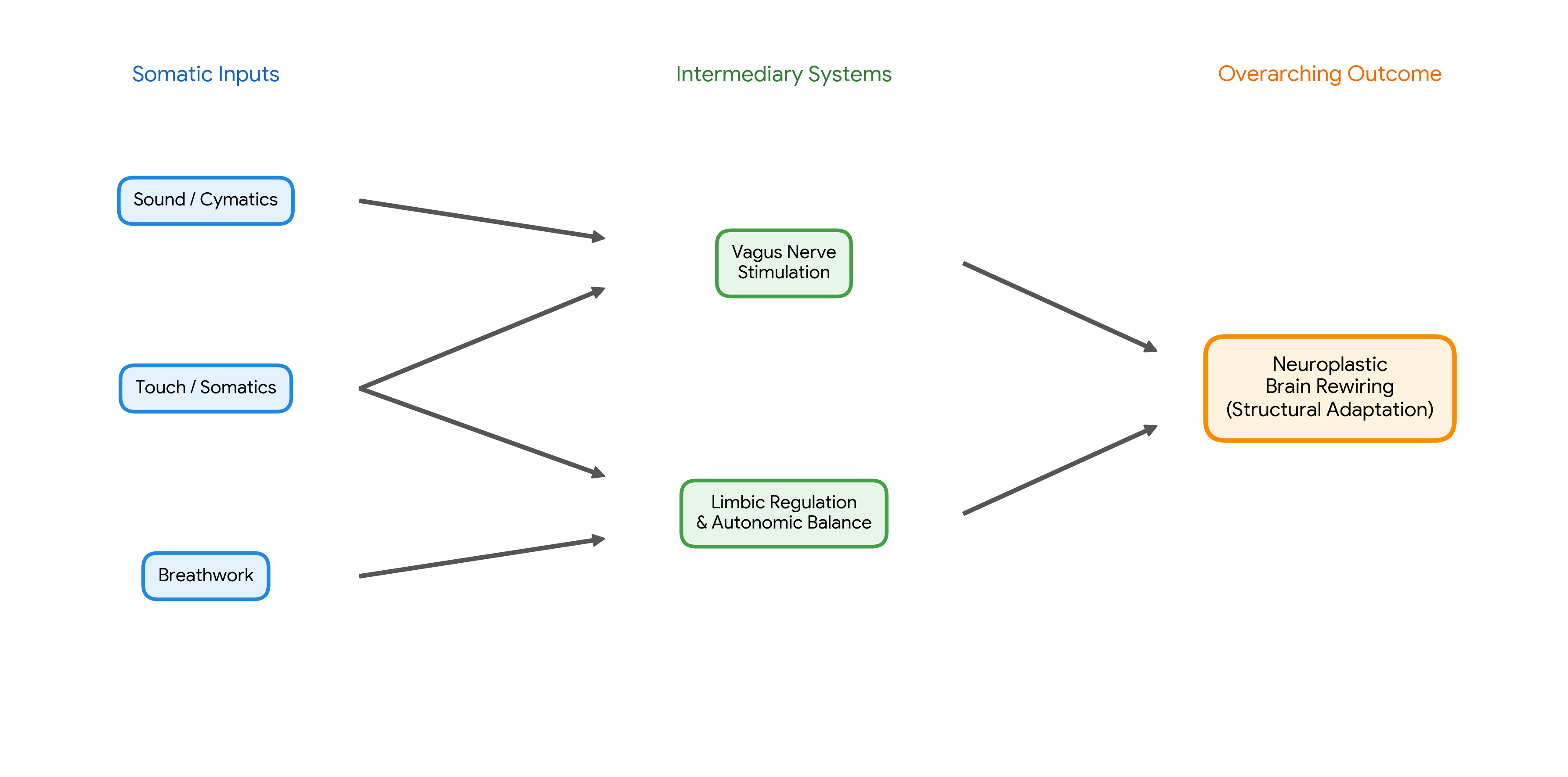
How They Connect. These practices are not separate, competing modalities — they are layers of one interconnected system. Auditory and physical inputs enter through somatic and vagal channels, feeding directly into the limbic system to drive long-term neuroplastic rewiring. Somatics creates the felt sense of safety that makes deeper work possible. Vagus nerve retraining builds the physiological foundation, strengthening the nerve that governs rest and digest. Brain rewiring addresses the deepest layer — the limbic system patterns that drive the whole loop. And advanced modalities like HRV training, Havening, and craniosacral therapy bridge them all, working across multiple systems simultaneously.
The Core Difference: Top-Down vs. Bottom-Up. All of these modalities can be understood through one key distinction — whether they work from the brain down to the body, or from the body up to the brain. Top-down approaches (like Cognitive Behavioral Therapy, traditional meditation, and positive affirmations) use your thoughts to calm physical sensations. Bottom-up approaches (like somatics, vagus nerve training, sound therapy, and EMDR) use physical sensation to calm the mind. Most people with chronic conditions benefit most from a bottom-up approach — because when the nervous system is stuck in threat, the thinking brain alone cannot talk the body out of it. You have to send the signal of safety through the body first, and let the brain follow.
| Approach | Focus | Examples |
|---|---|---|
| Top-Down | Brain → Body Using thoughts to calm physical sensations | Cognitive Behavioral Therapy (CBT), traditional meditation, positive affirmations |
| Bottom-Up | Body → Brain Using physical sensation to calm the mind | Somatics, Vagus Nerve Training, Sound Therapy, EMDR |
You do not need to do all of them at once. Most people start with body-based practices and vagus nerve stimulation, then layer in somatics as they build capacity, and add brain rewiring when they are ready to work at the limbic level. The order matters less than consistency. What matters is that you are sending your nervous system a steady, repeated message of safety — through whatever door your body is most ready to walk through.
Related conditions: